How Often Should You Clean Your Chimney? Expert Chimney Maintenance FAQs Answered
The first fire of the season should fill your home with warmth, not smoke. If you find yourself wondering when your chimney was last cleaned, you're not alone. For many homeowners, chimney cleaning isn't top of mind until poor fireplace performance or a safety concern appears.
The good news is that staying ahead of problems is simple. Industry experts recommend having your chimney inspected every year, regardless of how often you use your fireplace. Whether you need a full chimney cleaning depends on your usage, the amount of creosote buildup, and the overall condition of your chimney.
Since 1969, Mr. Chimney has provided professional chimney cleaning and repair services throughout Westchester, Putnam, Dutchess, Rockland, the Bronx, Manhattan, Fairfield County, and surrounding communities, helping homeowners and businesses keep their chimneys safe and efficient.
How Often Should You Schedule Chimney Cleaning?
Annual Chimney Inspections Are Essential
The National Fire Protection Association (NFPA) recommends having your chimney inspected at least once a year. Even if you only use your fireplace occasionally, an annual inspection helps identify creosote buildup, blockages, or damage that could affect your chimney's performance or create a fire hazard.
Chimney Inspection vs. Chimney Cleaning
A chimney inspection and chimney cleaning are not the same service. An inspection evaluates the condition of your chimney and determines whether cleaning or repairs are needed. If creosote, soot, or debris has accumulated, a professional chimney sweep will recommend a thorough cleaning to restore safe operation.
Homes That Need More Frequent Chimney Cleaning
If you burn wood regularly throughout the winter, your chimney may need cleaning more than once a year. Frequent fireplace use creates more creosote buildup, making regular maintenance essential for preventing chimney fires and maintaining proper ventilation.
Commercial Chimney Cleaning
Commercial properties, including restaurants with wood-fired ovens, apartment buildings, and other high-use facilities, require more frequent chimney cleaning than most homes. A scheduled maintenance plan helps ensure these systems remain safe, efficient, and compliant with local codes.
Chimney Cleaning for New Homeowners
If you've recently purchased a home, schedule a chimney inspection before using the fireplace. Since you don't know the maintenance history or burning habits of the previous owner, a professional inspection and, if needed, chimney cleaning will give you confidence that your fireplace is safe for the season ahead.
What Affects How Often Your Chimney Needs To Be Cleaned?
Two houses on the same block may need totally different schedules. Across the homes we service, the difference almost always comes down to habits, not luck.
- What you burn matters most. Seasoned hardwood that has been split and dried for a year burns hotter, cleaner, and leaves less buildup behind.
- Green or damp wood does the opposite. It smolders, creates more smoke, and coats the flue with creosote much faster.
- How you burn matters too. A strong, well-aired fire burns cleaner than a slow fire that gets choked down overnight.
- Slow, smoky fires are the ones that cause the most buildup inside a chimney.
- The type of appliance also makes a difference. Open fireplaces, wood stoves, inserts, and gas units all affect the flue differently. Wood creates the most buildup, while gas creates the least.
- Don't forget the flue you can't see from the living room. The one venting your furnace, boiler, or water heater also needs annual sweeping, whether it runs on oil or gas.
Does a Gas Fireplace Still Need Cleaning?
Yes, even though it barely makes creosote. Gas units still need the yearly inspection because moisture, debris, animal nests, and a failing liner cause venting problems no matter what you burn. The cleaning is lighter. The safety check is exactly the same.
What is Creosote and How Much Buildup Means It's Time?
Most chimney cleaning comes down to one thing: creosote. Wood smoke cools as it climbs the flue and leaves a residue on the walls. That residue is creosote. It's flammable. Enough of it, hot enough, and you've got a chimney fire.
The Three Stages of Creosote
It shows up in stages, and the stage tells you a lot. First it's a light, dusty soot that brushes right off, cheap and quick. Then it turns flaky and crusty, and now you need stiffer brushes and a bit of muscle. The third stage is the bad one. A shiny, baked-on glaze that clings to the flue and can hold heat against the liner until it cracks, which is how a simple chimney cleaning turns into a chimney repair bill.
Signs Your Chimney Needs Cleaning
Your chimney often gives you warning signs before a serious problem develops. Recognizing these early symptoms can help you schedule chimney cleaning before creosote buildup or a blockage becomes a safety hazard.
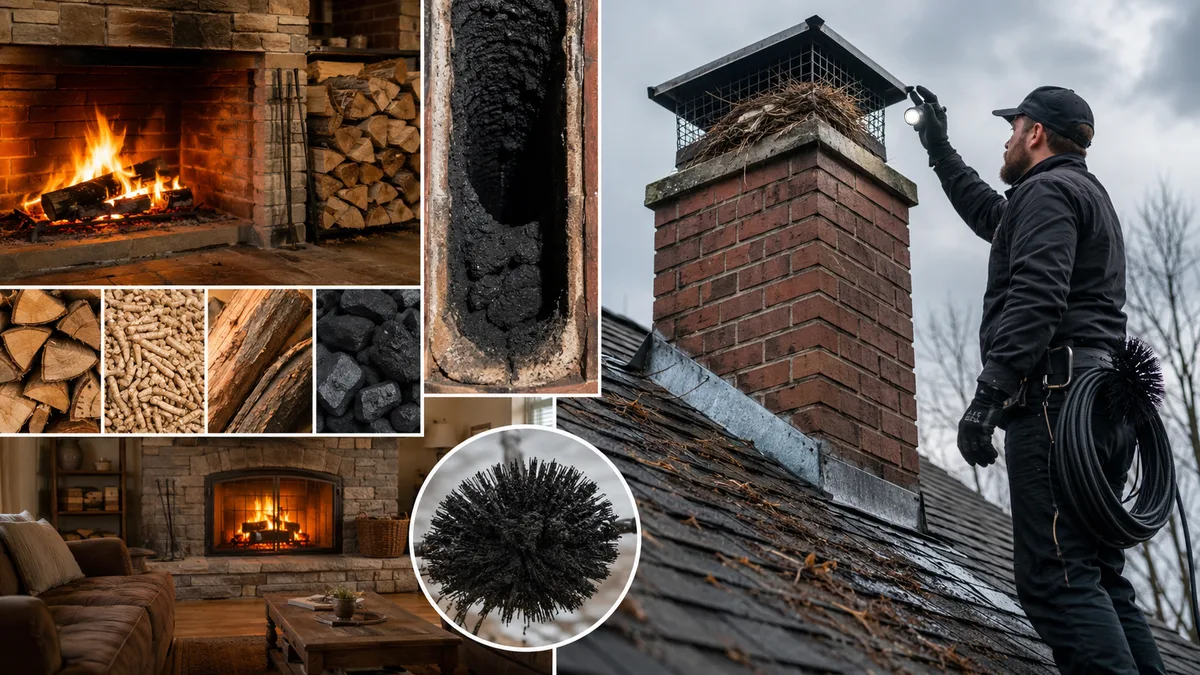
Common signs your chimney needs cleaning include smoke backing into your home instead of venting outdoors, a strong smoky or campfire odor when the fireplace isn't in use, visible black soot or creosote around the damper, debris falling into the firebox, or fires that burn slowly and produce excessive smoke. Scratching or chirping sounds inside the flue can also indicate that birds or small animals have built a nest, creating a dangerous obstruction.
If you notice any of these warning signs, don't wait until next season. A professional chimney sweep removes creosote, soot, and blockages while reducing the risk of chimney fires and carbon monoxide exposure. At Mr. Chimney, our certified technicians protect your home with drop cloths, thorough cleaning, and careful workmanship from start to finish.
Chimney Cleaning vs. Fireplace Cleaning
Although the terms are often used interchangeably, chimney cleaning and fireplace cleaning are two different services.
Fireplace cleaning focuses on the visible components of your fireplace, including the firebox, glass doors, grate, hearth, and ash. Much of this routine maintenance can be handled by homeowners between professional visits.
Chimney cleaning, however, addresses the hidden parts of the system that are critical for safety. This includes removing creosote, soot, and debris from the flue and chimney liner to ensure smoke and harmful gases vent properly. A professional chimney cleaning typically includes both the fireplace and chimney system, but it's always worth confirming what's included in your service.
Can You Clean a Chimney Yourself?
Homeowners can safely remove cold ashes, clean fireplace glass, and keep the hearth tidy. Regularly checking for signs of creosote buildup or poor fireplace performance can also help you identify when professional service is needed.
However, chimney cleaning itself should be left to certified professionals. Specialized equipment is required to remove hardened creosote safely, and working on a roof or inside a chimney can be dangerous without the proper training. Professional chimney cleaning also includes an inspection that can uncover hidden damage before it becomes a costly repair.
What Happens If You Skip Chimney Cleaning?
Skipping annual chimney cleaning allows creosote to continue building inside the flue, increasing the risk of chimney fires. Over time, light soot hardens into glazed creosote, which is much more difficult and expensive to remove.
Delaying maintenance can also allow small issues, such as cracked liners, water damage, or deteriorating masonry, to go unnoticed until major repairs are needed. Routine chimney cleaning is one of the simplest and most affordable ways to protect your fireplace and your home.
Final Thoughts
The best way to keep your fireplace operating safely is with an annual chimney inspection and professional chimney cleaning whenever buildup or other warning signs are present. If you use your fireplace frequently, you may benefit from cleaning more than once a year.
If it's time for your annual chimney cleaning, contact Mr. Chimney to schedule service for your home or business. Call 1-347-284-1155 or request an estimate online.
Frequently Asked Questions
How often should chimney cleaning be scheduled?
Most homeowners should schedule an annual chimney inspection and have chimney cleaning performed whenever creosote buildup is present. Homes that burn wood regularly may require cleaning once per season.
What are the signs that chimney cleaning is needed?
Common signs include smoke entering your home, strong fireplace odors, visible soot or creosote, debris falling into the firebox, slow-burning fires, or animal noises coming from the chimney. Any of these symptoms indicate it's time to schedule professional chimney cleaning.
What's the difference between chimney cleaning and fireplace cleaning?
Fireplace cleaning focuses on the visible areas, such as the firebox, glass doors, and hearth. Chimney cleaning removes creosote, soot, and blockages from the flue and chimney liner, helping your fireplace vent safely and reducing the risk of chimney fires.
Can I perform chimney cleaning myself?
You can remove ashes and clean the visible portions of your fireplace, but professional chimney cleaning is recommended for the flue and chimney liner. Certified technicians have the equipment and experience needed to remove hazardous creosote safely and inspect for hidden damage.
How much creosote indicates it's time for chimney cleaning?
Industry guidelines recommend scheduling chimney cleaning when creosote buildup reaches approximately 1/8 inch. Annual inspections help identify buildup before it becomes a fire hazard or requires more extensive cleaning.